CarPAL
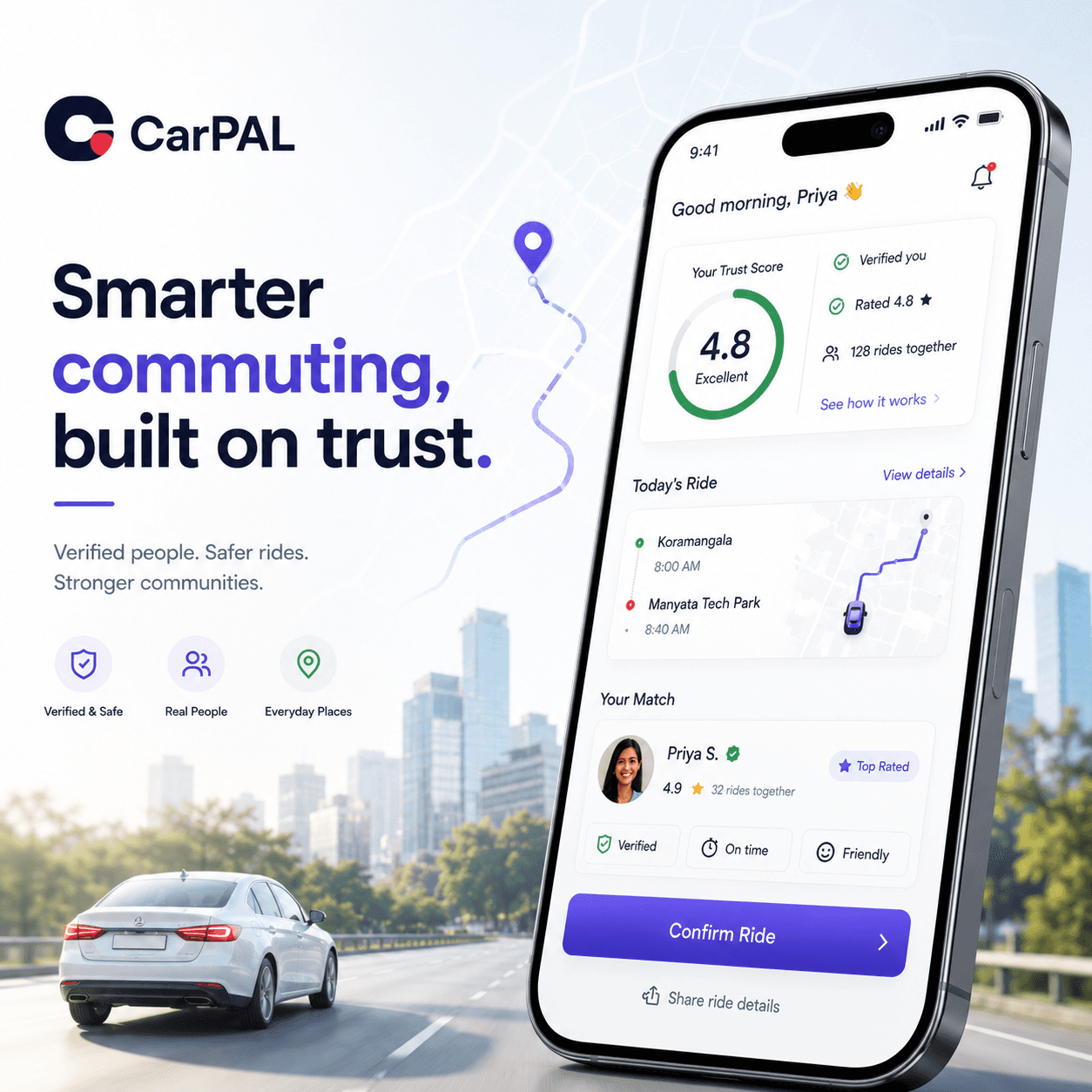
Designing a trusted commuter coordination system that explored how shared routines, route-based matching, and behavioral trust signals could reduce the emotional and financial strain of daily urban commuting.
Reframed in 2026, UX Research, Information Architecture
View detailed UX concept case study here
CarPAL - Designing a trusted commuter coordination system for urban professionals
Originally conceptualized as an independent UX project, the work evolved into a broader systems-thinking exercise focused on mobility coordination, commuter wellbeing, and recurring behavioural patterns within urban infrastructure.
The Challenge
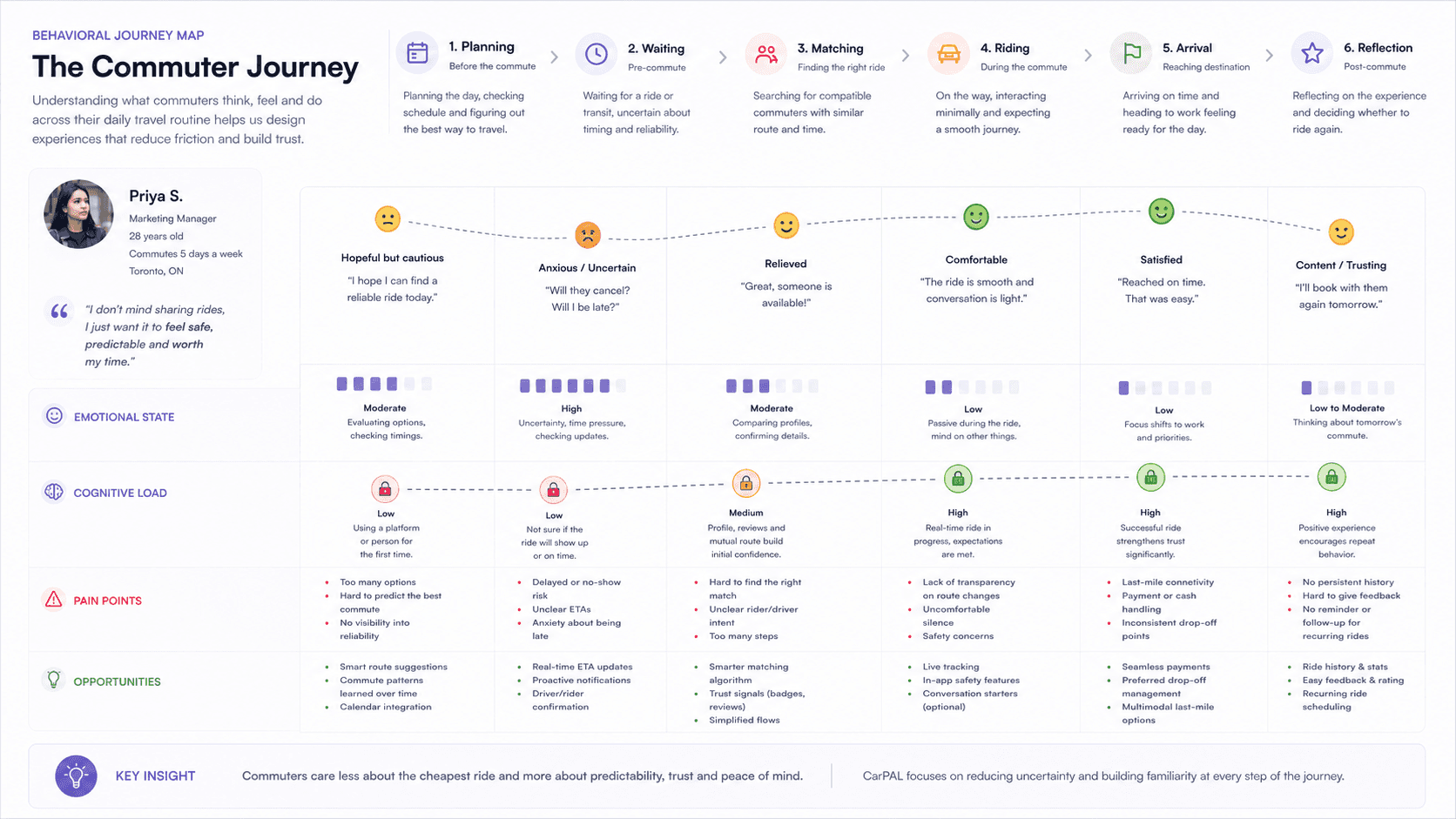
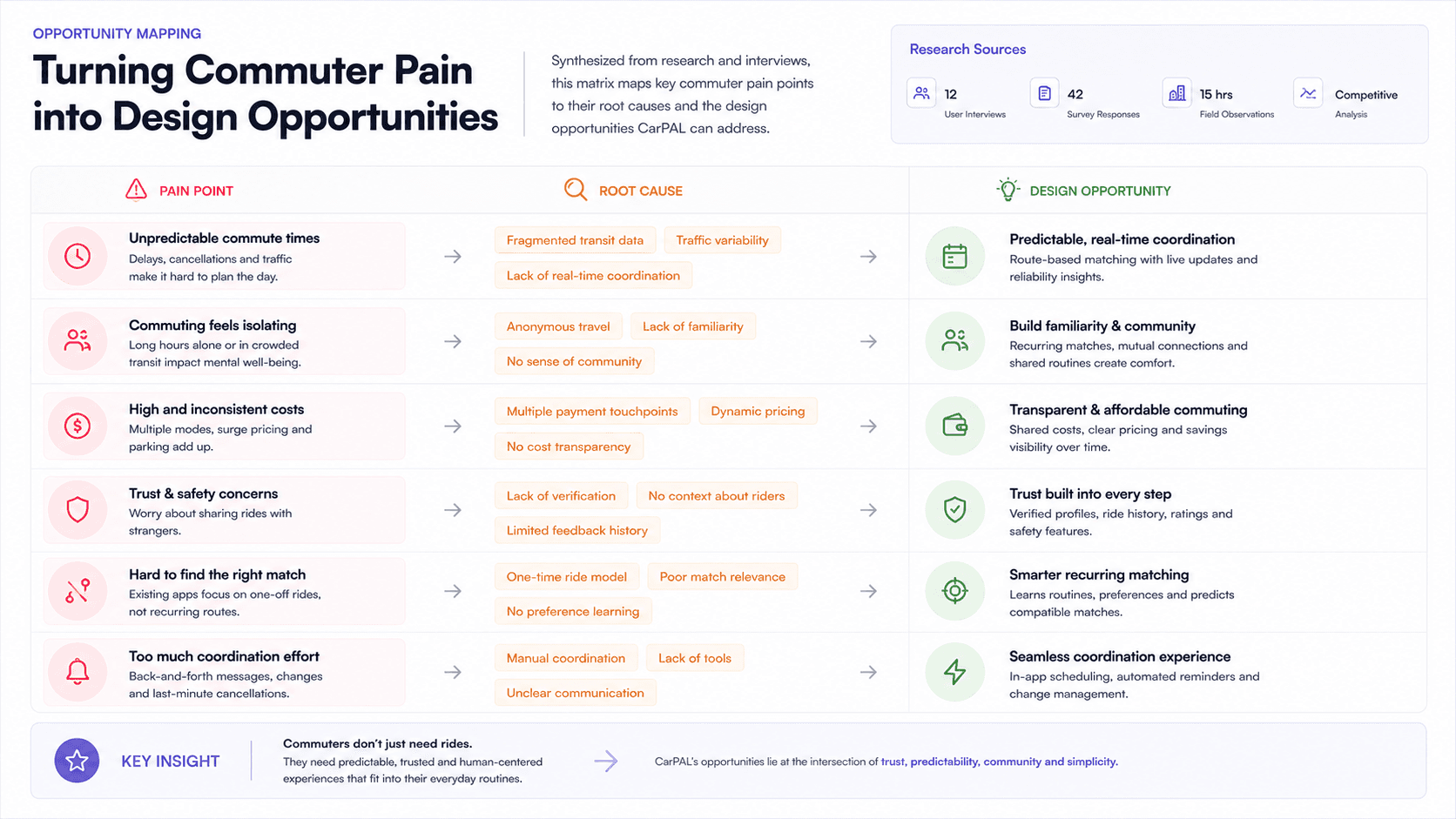
Daily commuting experiences often feel:
unpredictable
isolating
cognitively draining
financially inefficient
Most mobility platforms optimize transportation logistics, but rarely address emotional friction, trust, or recurring commuter behaviour.
The Opportunity
How might we create a commuting experience that feels:
more predictable
socially comfortable
operationally lightweight
and behaviourally trustworthy?
Rather than designing another transactional ride-sharing platform, the concept focused on recurring commuter relationships and route familiarity.
Key Focus Areas
Trust & behavioural UX
Route coordination systems
Shared mobility experiences
Commuter wellbeing
Service design thinking
Mobile interaction design
Systems Thinking Approach
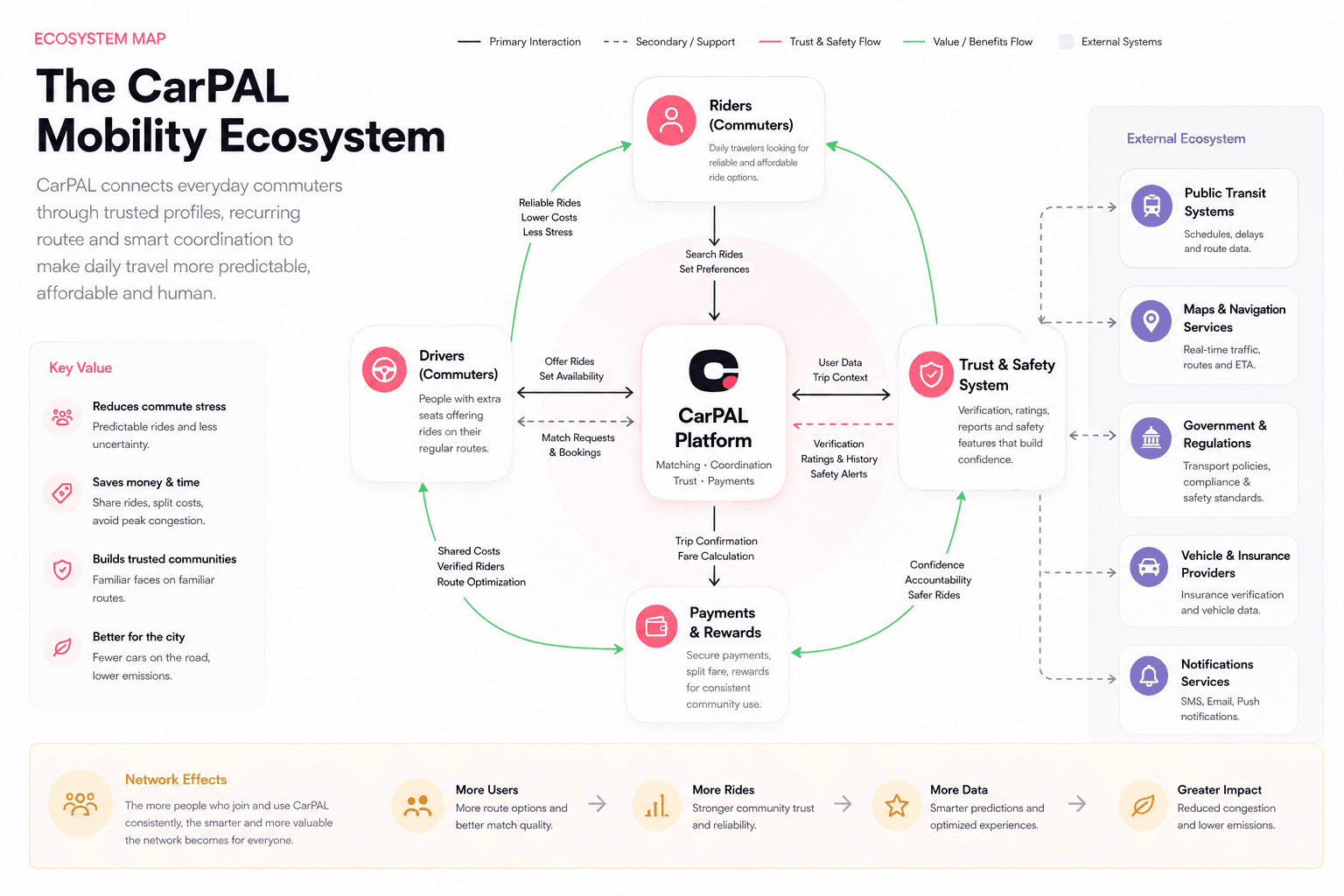
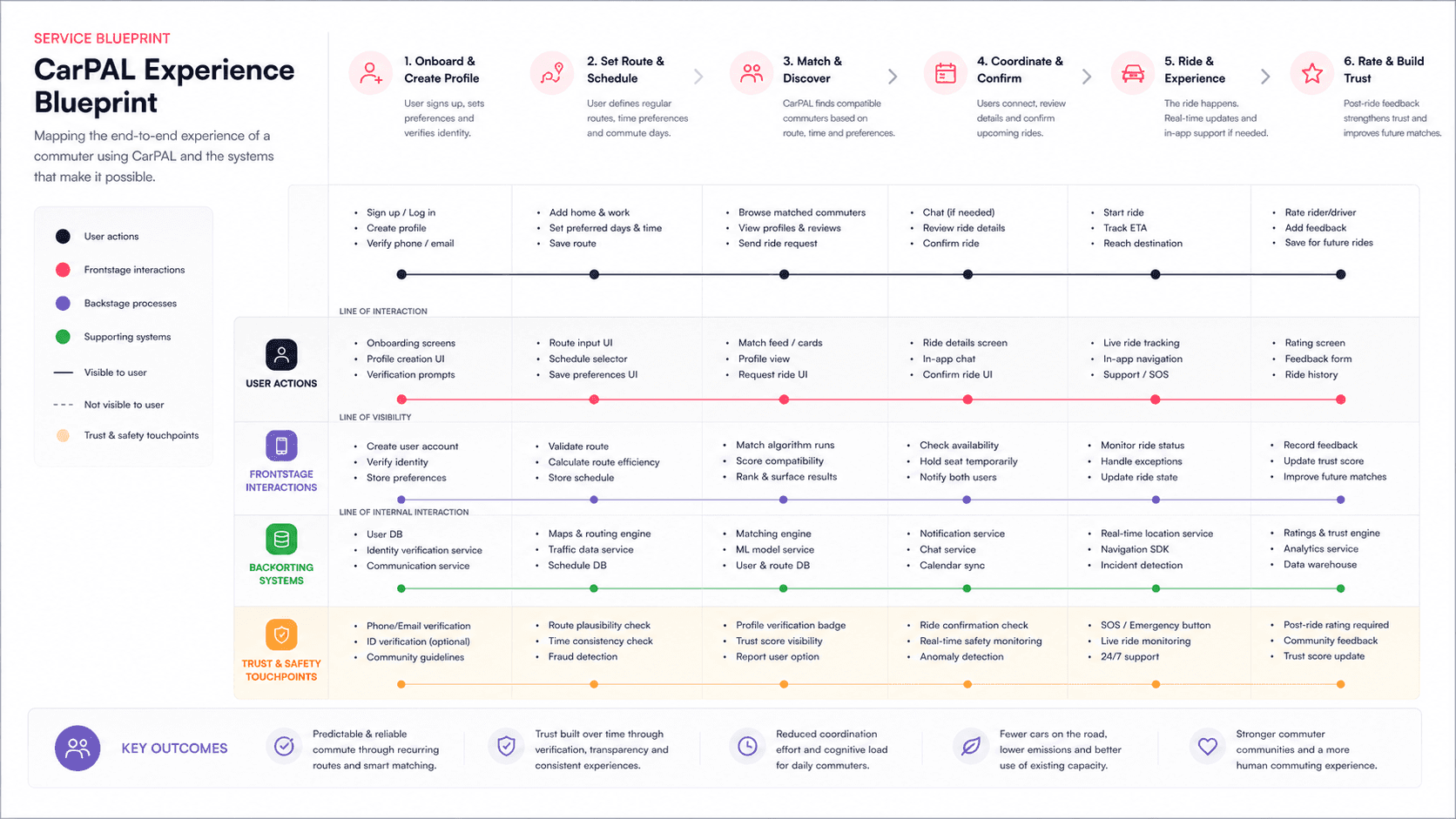
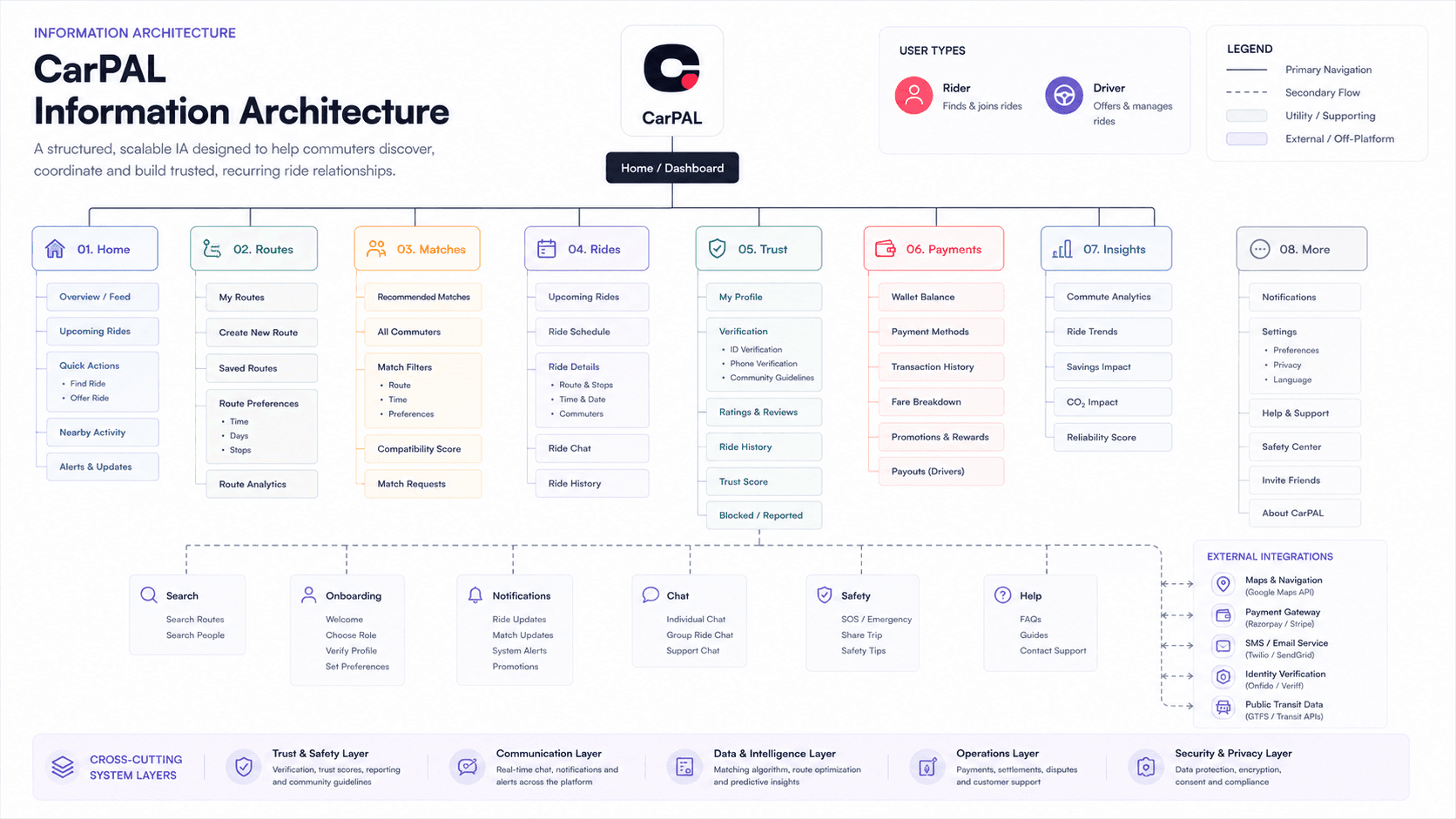
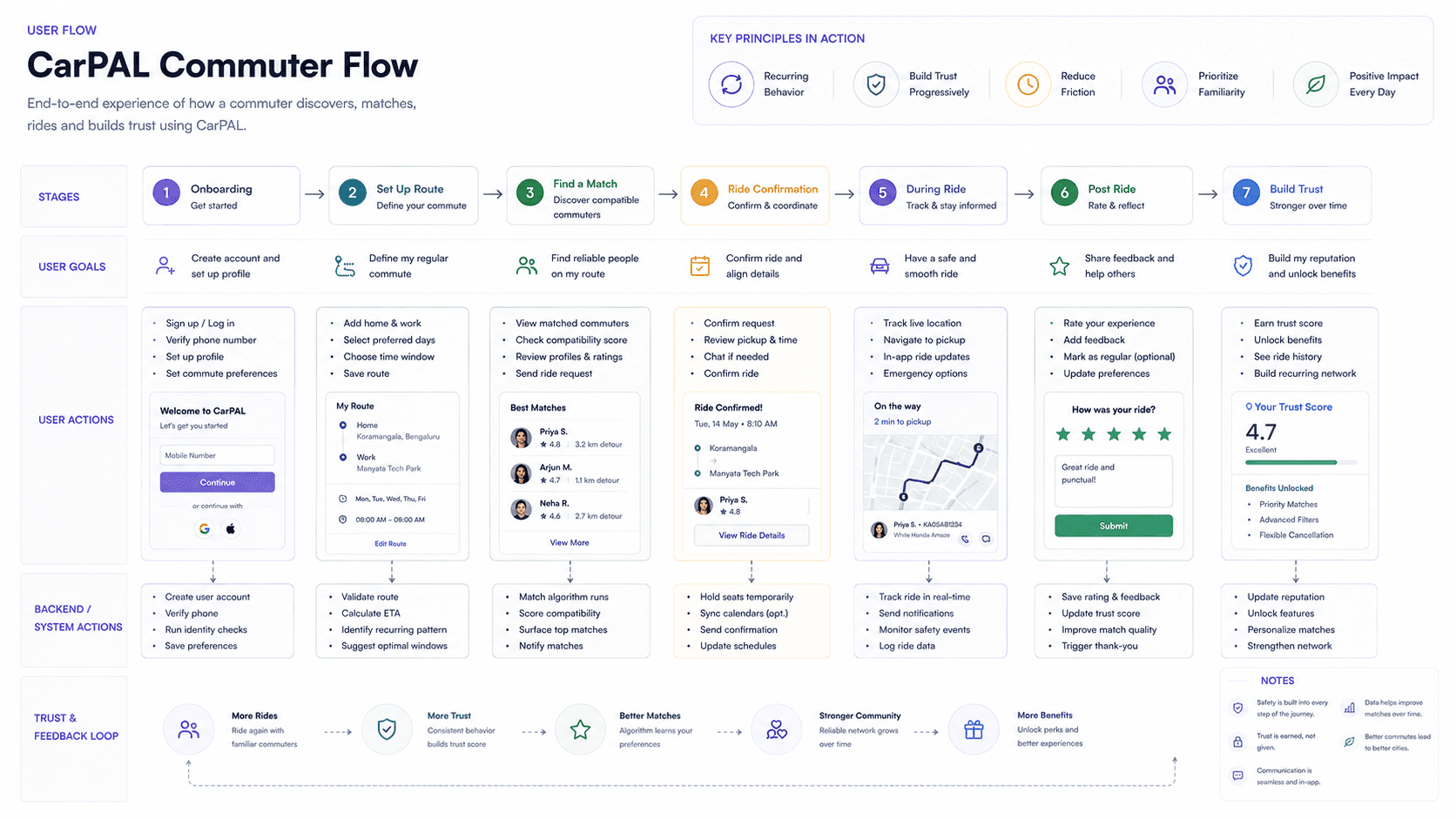
The experience was designed around four connected systems:
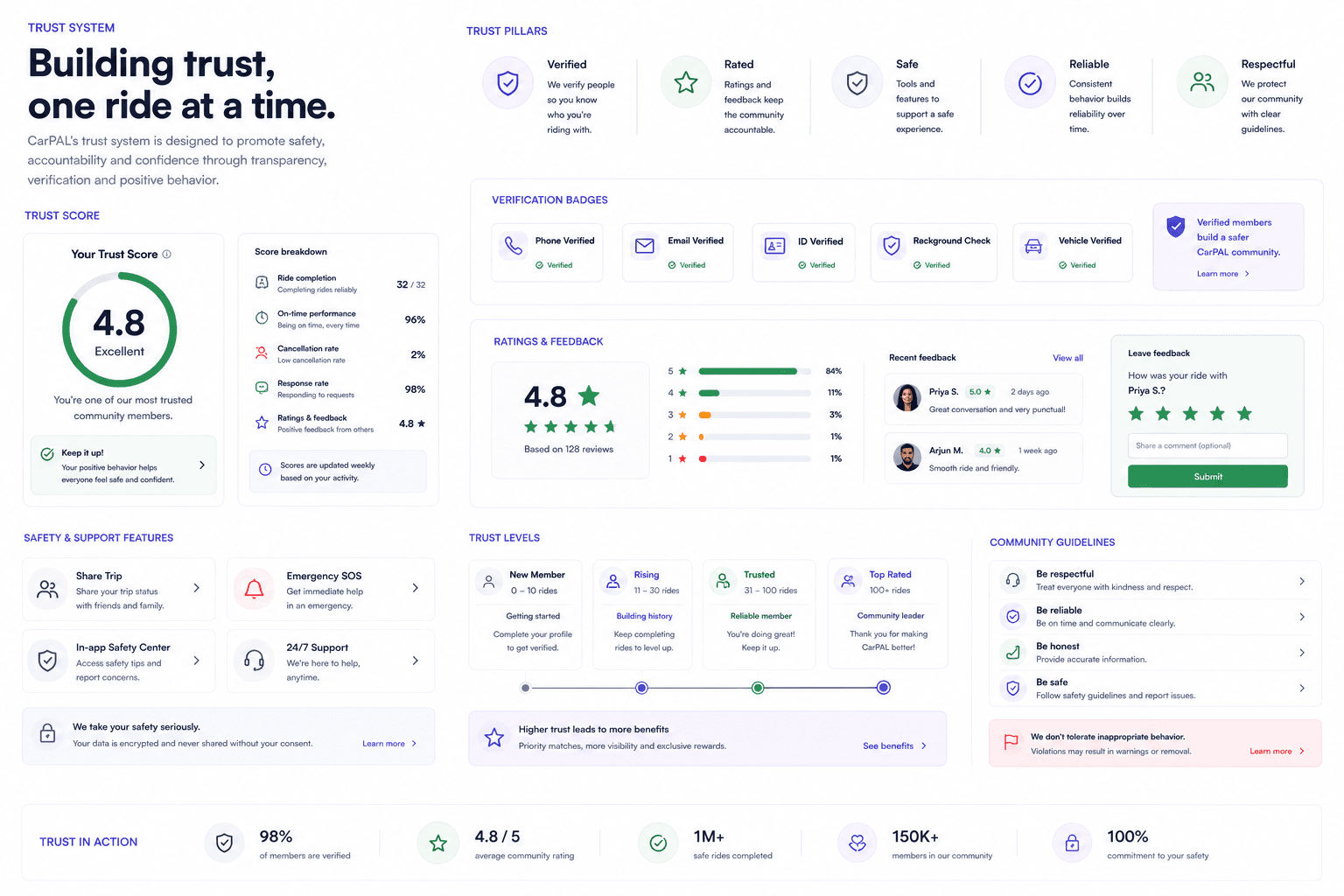
commuter identity & trust
recurring route coordination
ride scheduling workflows
feedback & familiarity loops
This helped shift the project from a simple mobility interface into a broader exploration of human-centered transportation systems.
Outcome
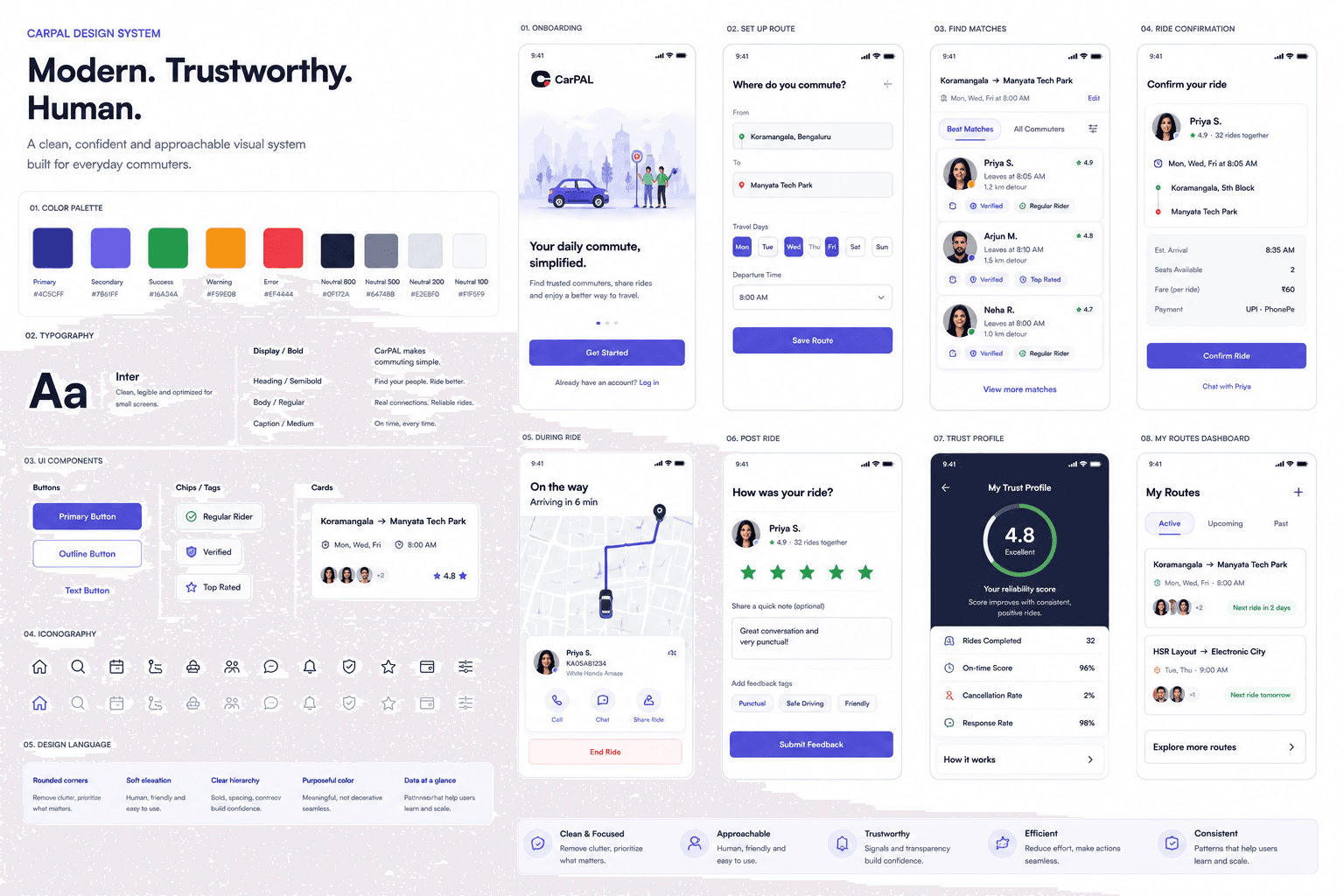
The final concept demonstrated how mobility products can move beyond transactional interactions and instead support predictable, emotionally-aware, and community-oriented commuting experiences.
The project also became an important exploration of systems thinking, behavioural design, and service orchestration within complex urban ecosystems.
Reflection
This project fundamentally changed how I think about experience design.
Rather than viewing commuting as a purely logistical problem, the process revealed how transportation systems are deeply connected to emotional wellbeing, social trust, routine behaviour, and cognitive load.
It reinforced the importance of designing products not only for efficiency, but also for predictability, comfort, and human connection.
View detailed UX concept case study here