Empowering Employees to Become Brand Advocates
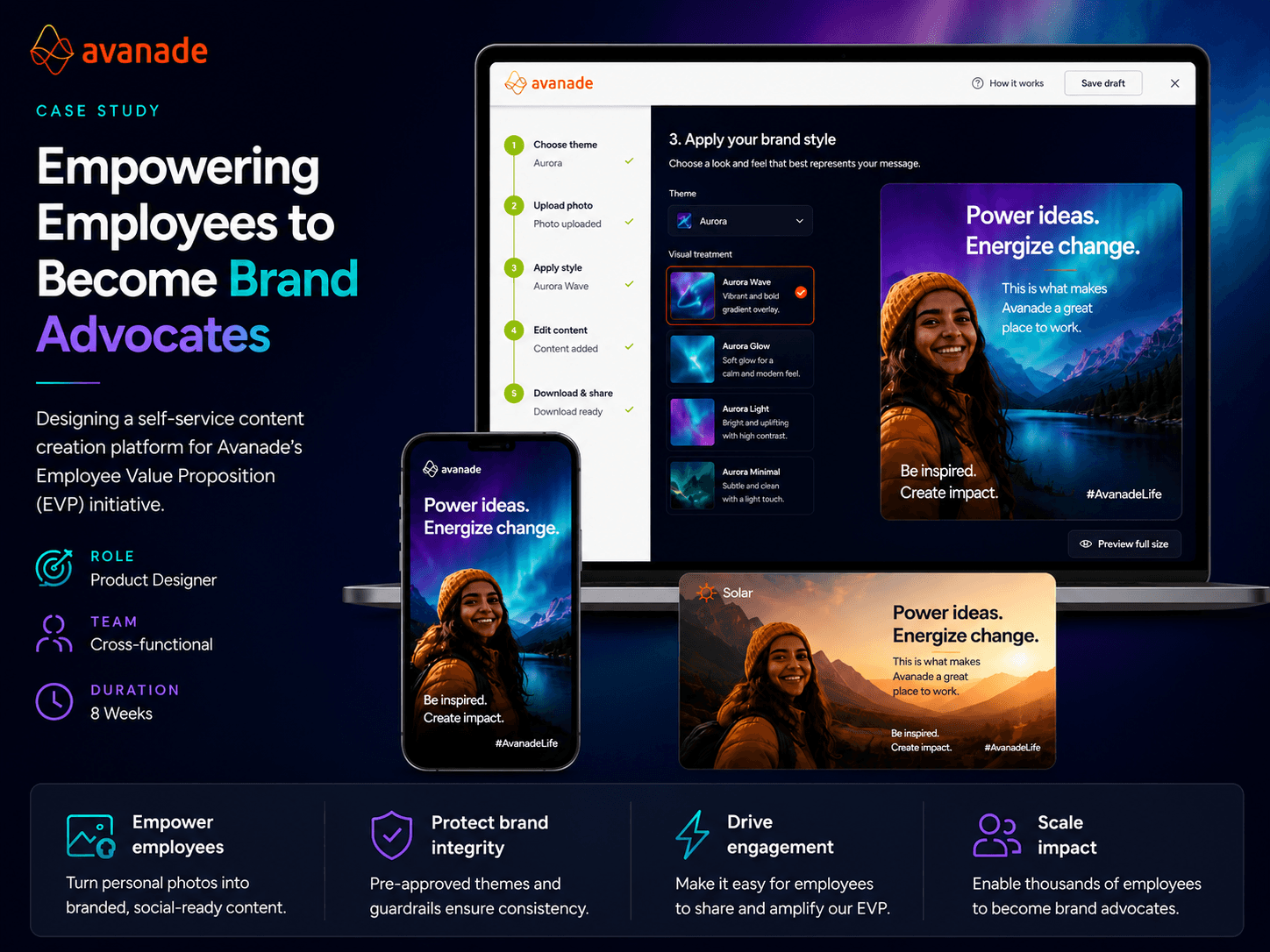
Designed a self-service content creation platform that enabled employees to generate branded social media assets in minutes while maintaining brand consistency across channels.
Product Design, Interaction Design, Prototyping
View detailed UX case study here
Empowering Employees to Become Brand Advocates
Employee advocacy was a key pillar of Avanade's Employee Value Proposition (EVP) initiative. However, creating branded social content required manual support from marketing teams using tools like PowerPoint and Adobe Creative Suite. This process was difficult to scale and created bottlenecks whenever employees wanted personalized social assets.
Our goal was to create a self-service experience that would allow employees to generate professional, brand-compliant social content without requiring design expertise.
The Opportunity
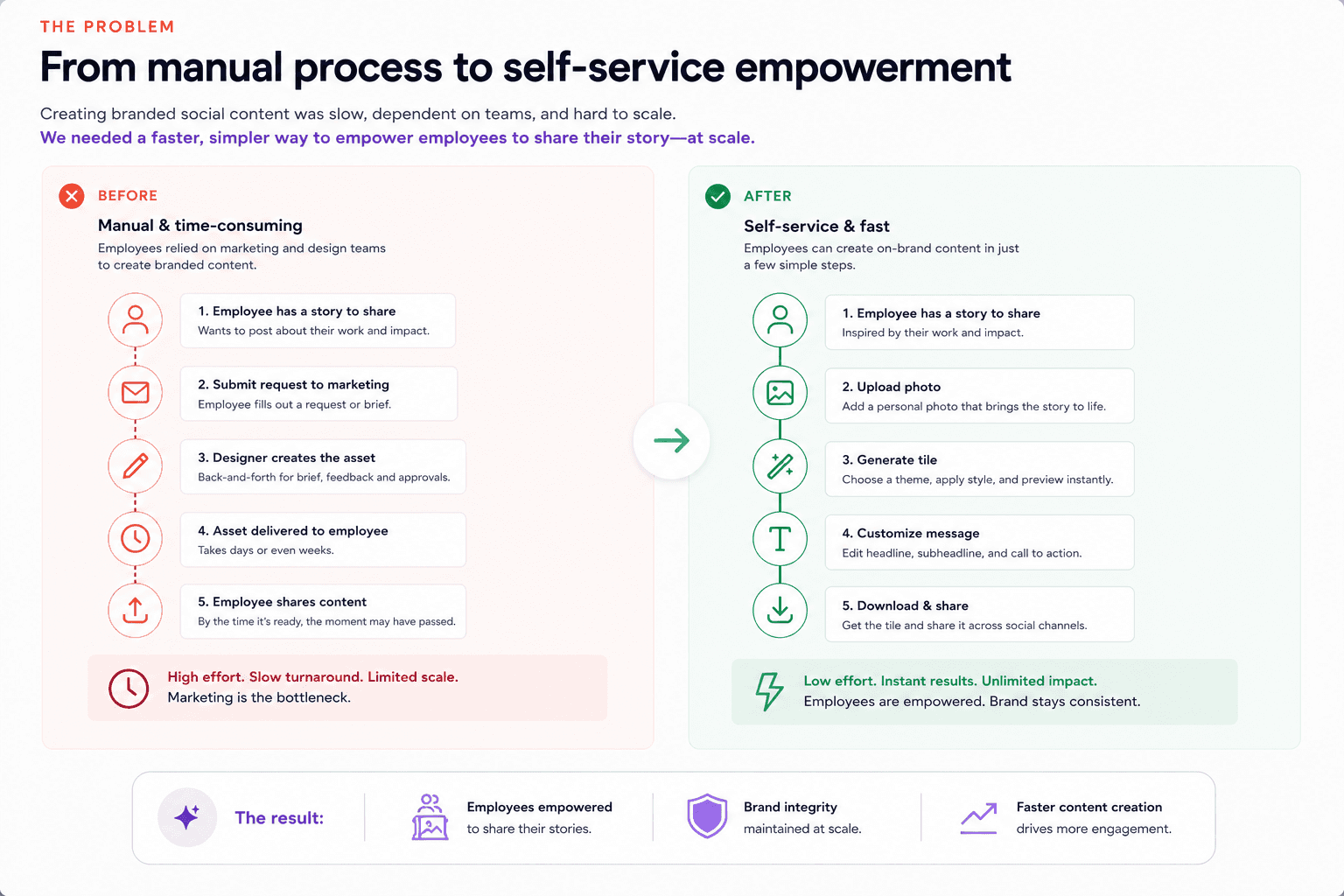
How might we enable employees to create professional social media assets independently while ensuring brand consistency across the organization?
The challenge wasn't simply creating a social media tool. We needed to balance employee expression with corporate brand governance, making it easy for anyone to participate while protecting the integrity of the Avanade brand.
My Role
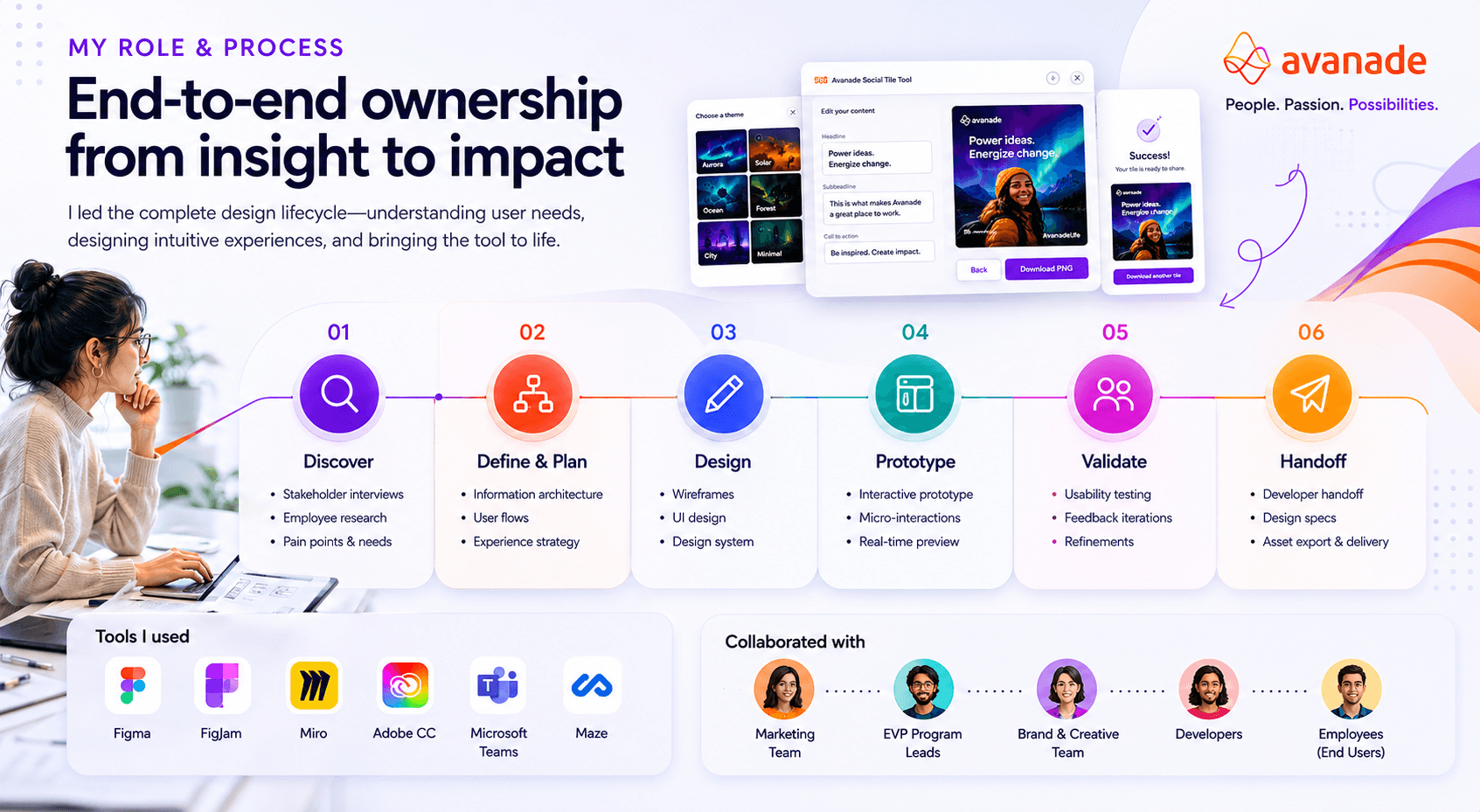
As a UI and Experience Designer, I contributed to:
Experience design
User flows
Interaction design
Visual design
Interactive prototyping
Stakeholder reviews
Developer handoff
I collaborated closely with HR, marketing, engineering, and fellow designers throughout the project lifecycle.
The Ecosystem
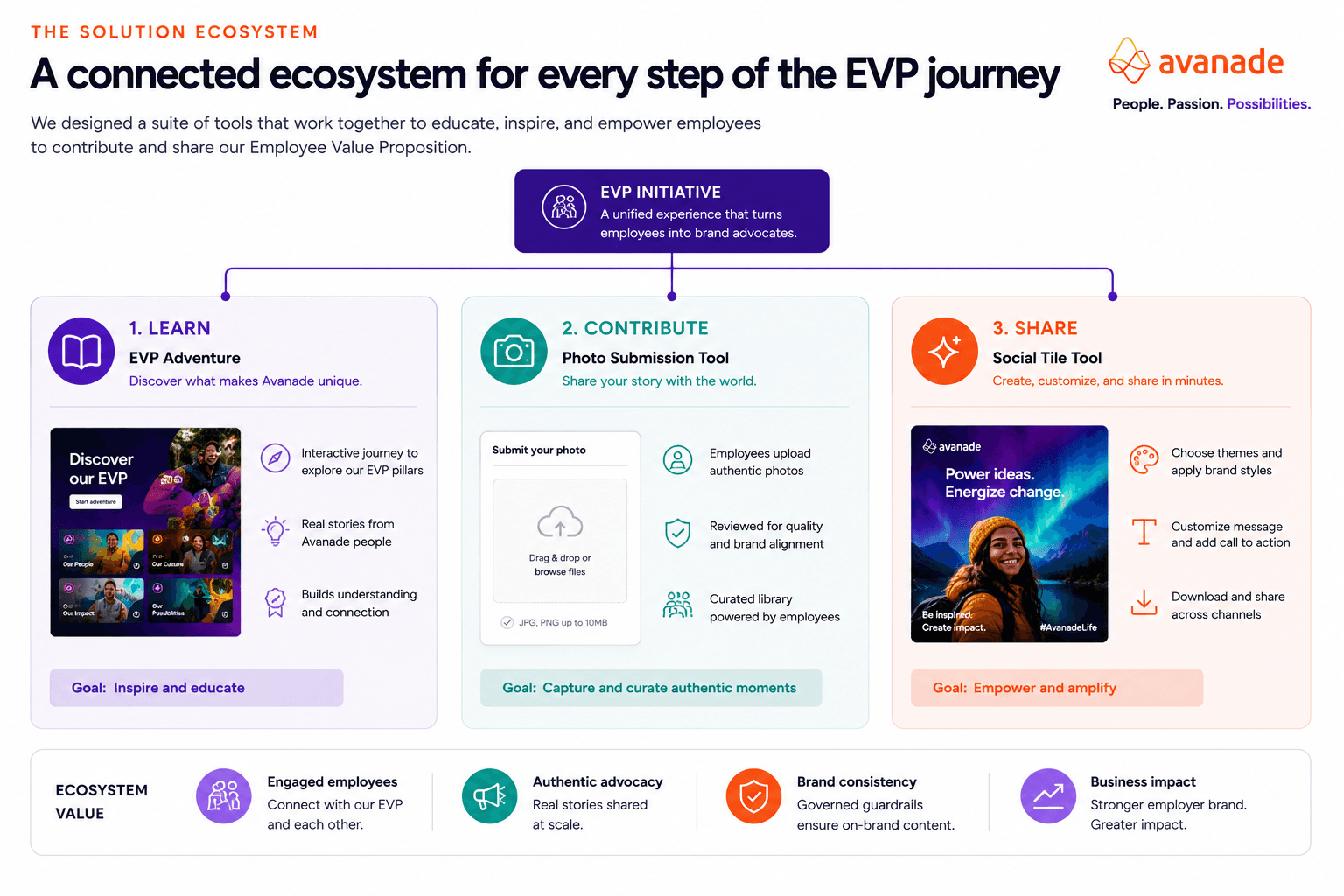
The Social Tile Tool was one part of a broader EVP initiative designed to educate, engage, and empower employees.
The ecosystem consisted of:
EVP Adventure, an interactive experience introducing employees to the EVP pillars
Photo Submission Tool, allowing employees to contribute authentic imagery
Social Tile Tool, enabling employees to create and share branded social content
Together, these experiences helped transform employees into active participants and advocates of the EVP program.
Design Principles
Four principles guided every design decision throughout the project.
Simplicity
The experience needed to work for employees regardless of their design skill level. We prioritized clarity, guided workflows, and minimal decision-making.
Consistency
Employees needed freedom to personalize content while ensuring every asset remained visually aligned with brand standards.
Flexibility
The experience had to support personal storytelling through customizable themes, imagery, and messaging.
Speed
Creating and sharing content needed to take minutes, not days.
The Design Challenge
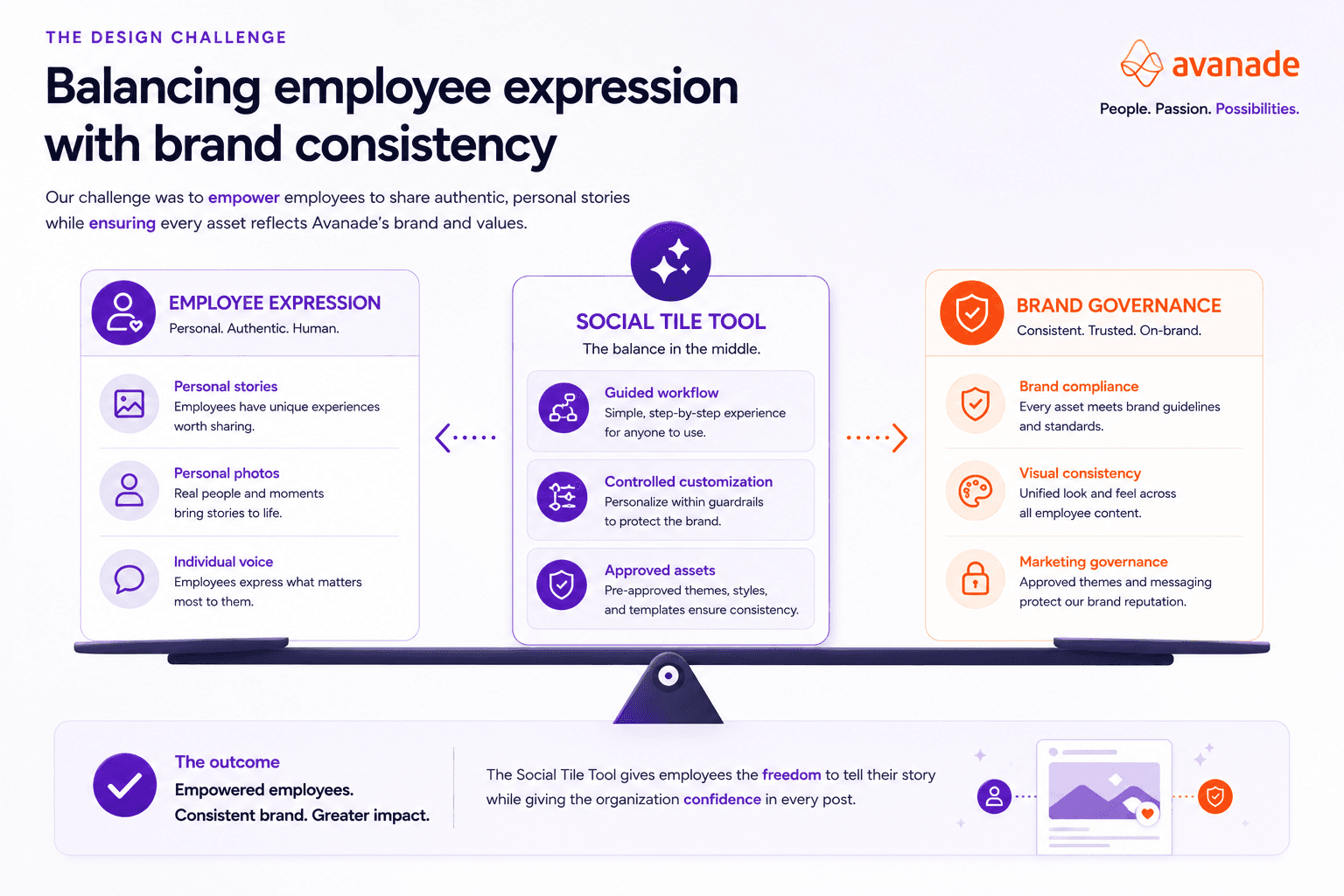
One of the most interesting tensions in the project was balancing employee expression with brand governance.
Employees wanted to tell authentic stories using their own photos and messages.
Marketing teams needed confidence that every asset reflected the company's visual identity and messaging standards.
Rather than offering unrestricted customization, we designed a system of guided workflows, approved visual treatments, and controlled customization options that allowed employees to personalize content while remaining on-brand.
The Experience
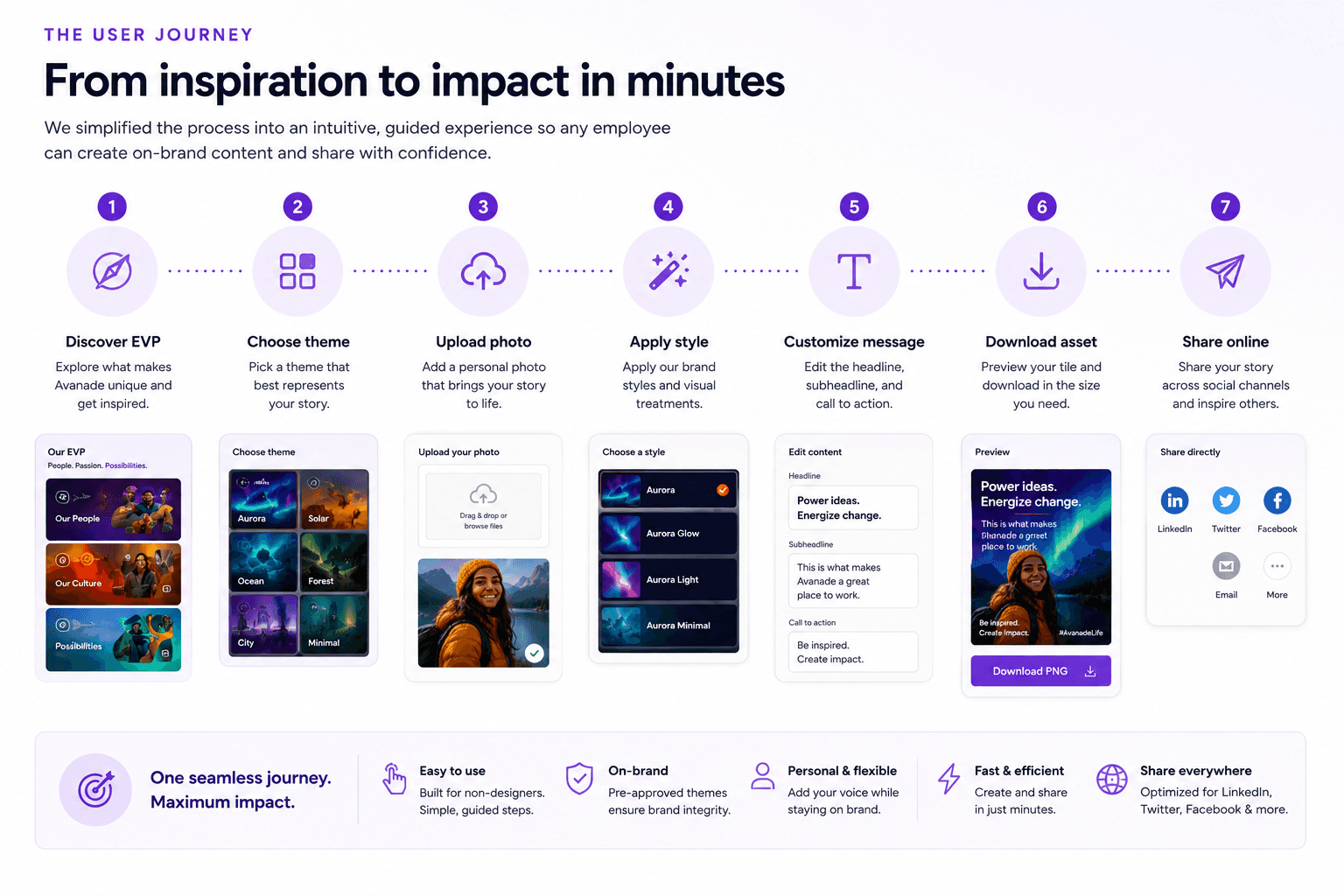
The experience was designed as a guided workflow consisting of six key stages:
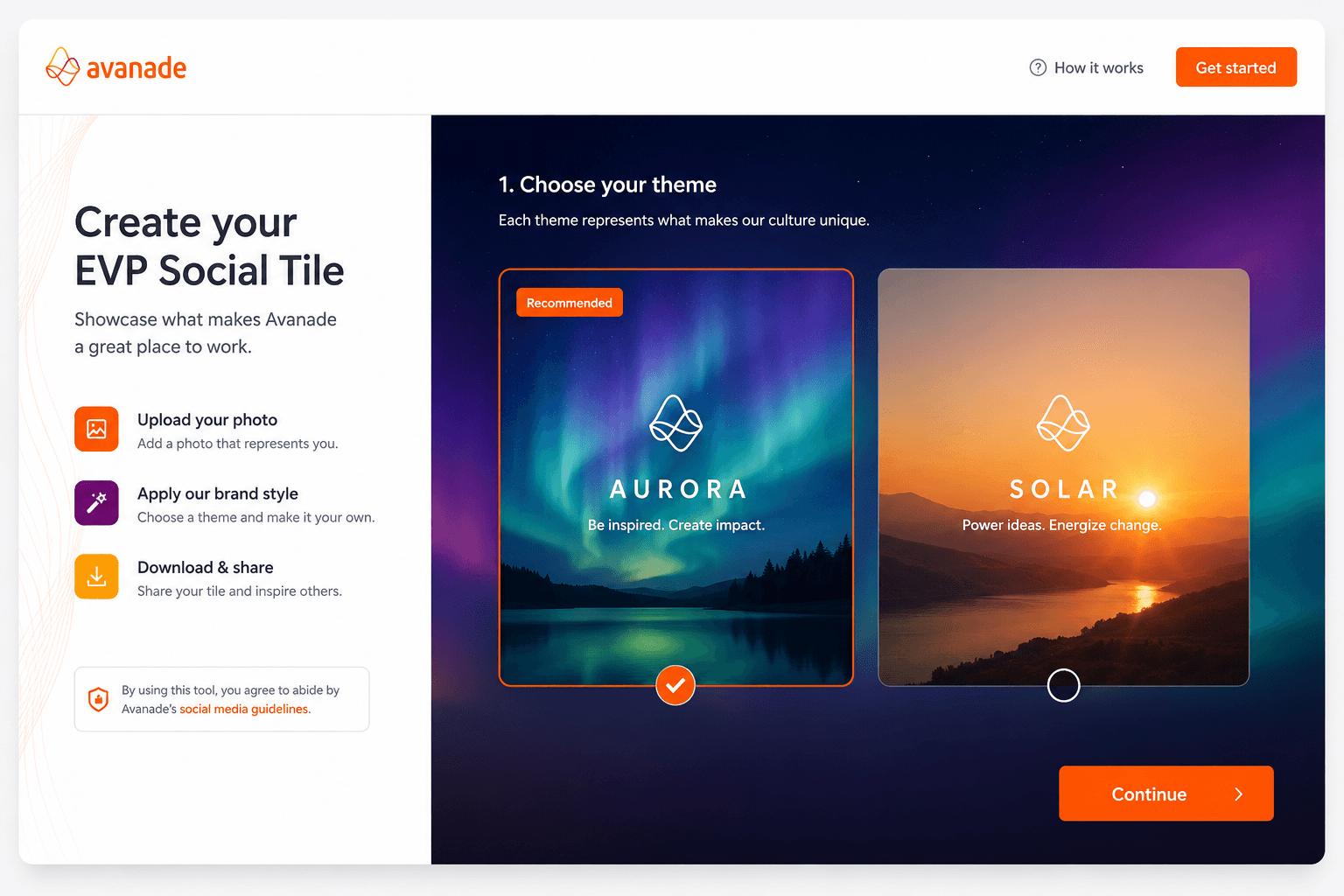
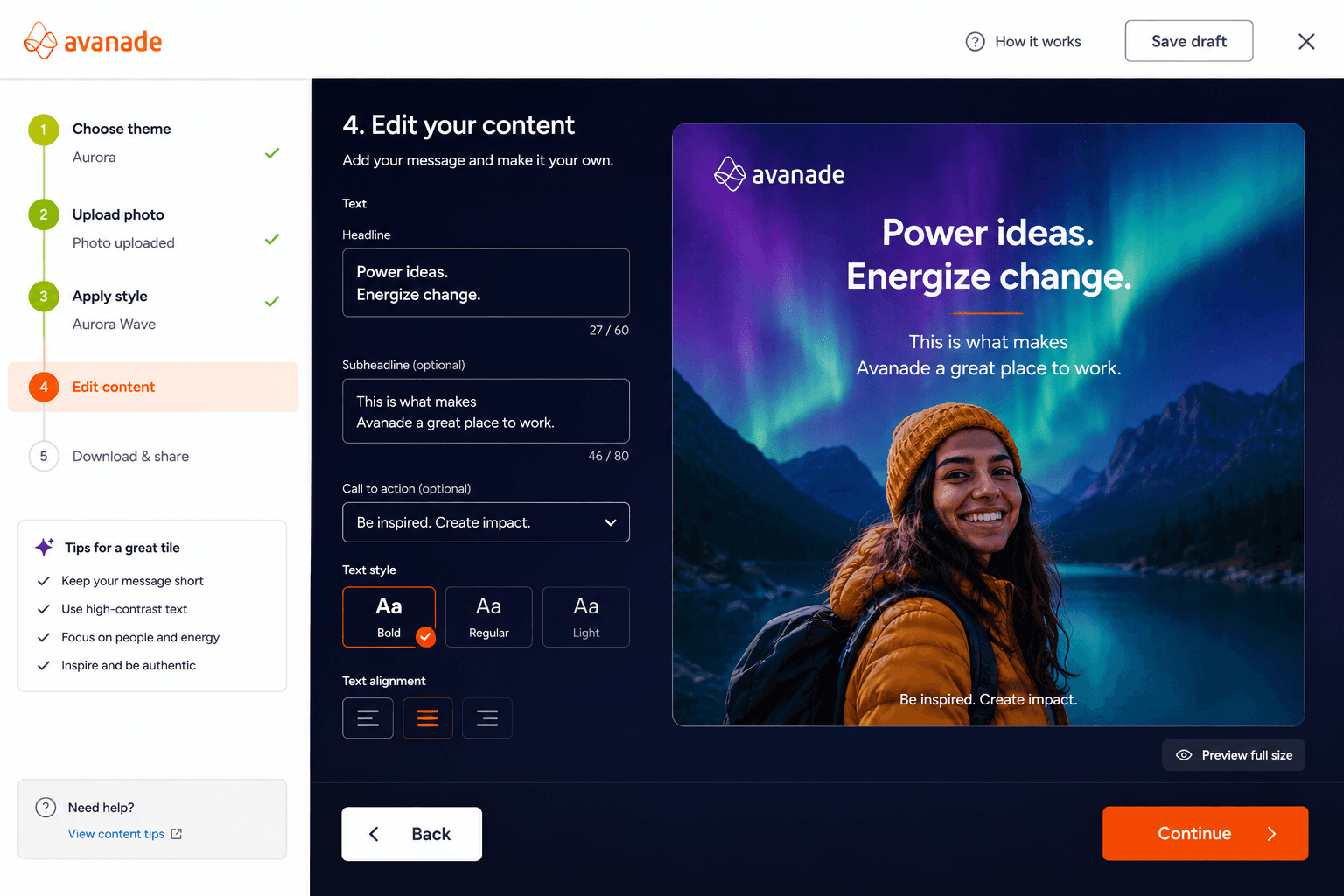
1. Choose a Theme
Employees begin by selecting a branded visual style that best reflects their story.
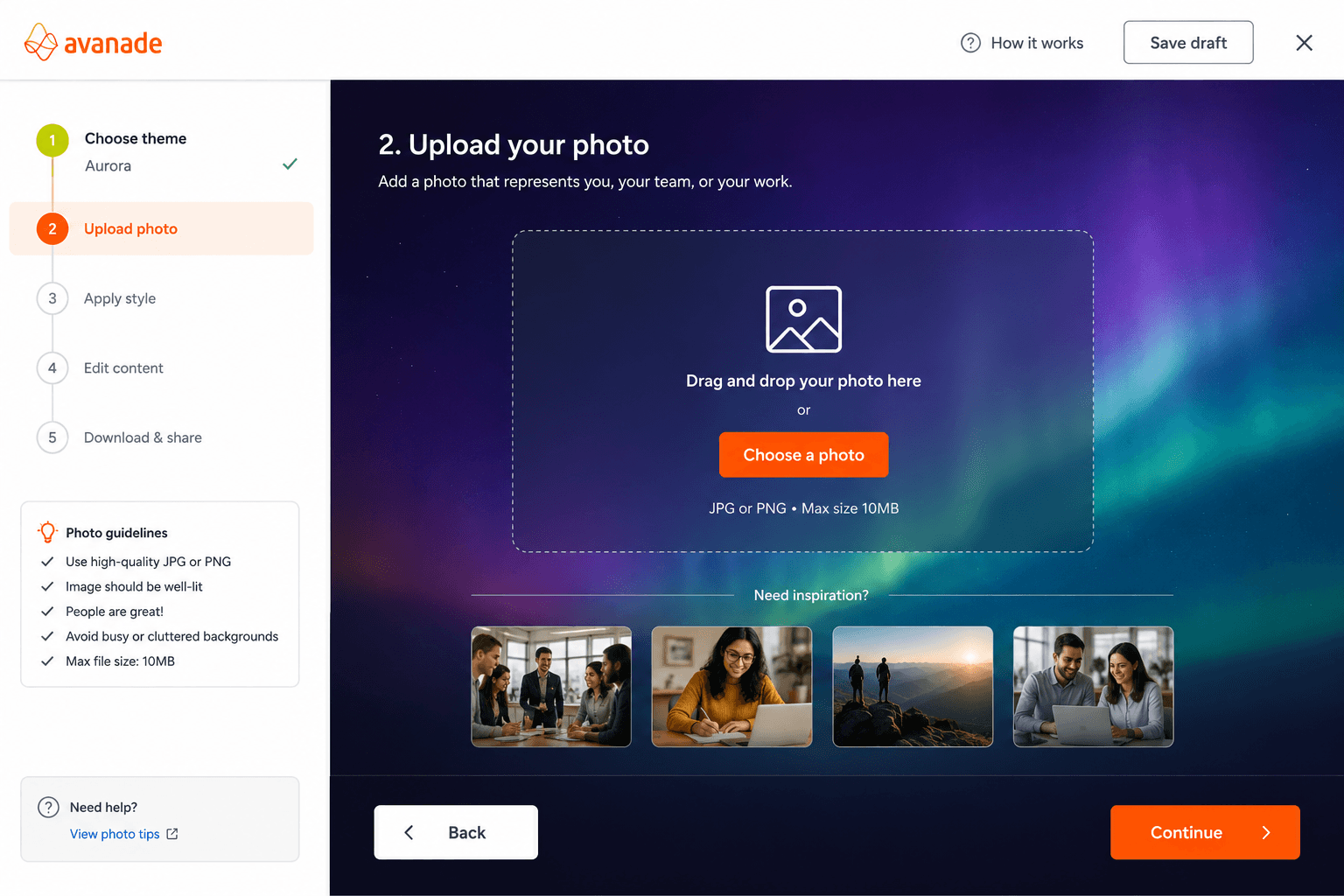
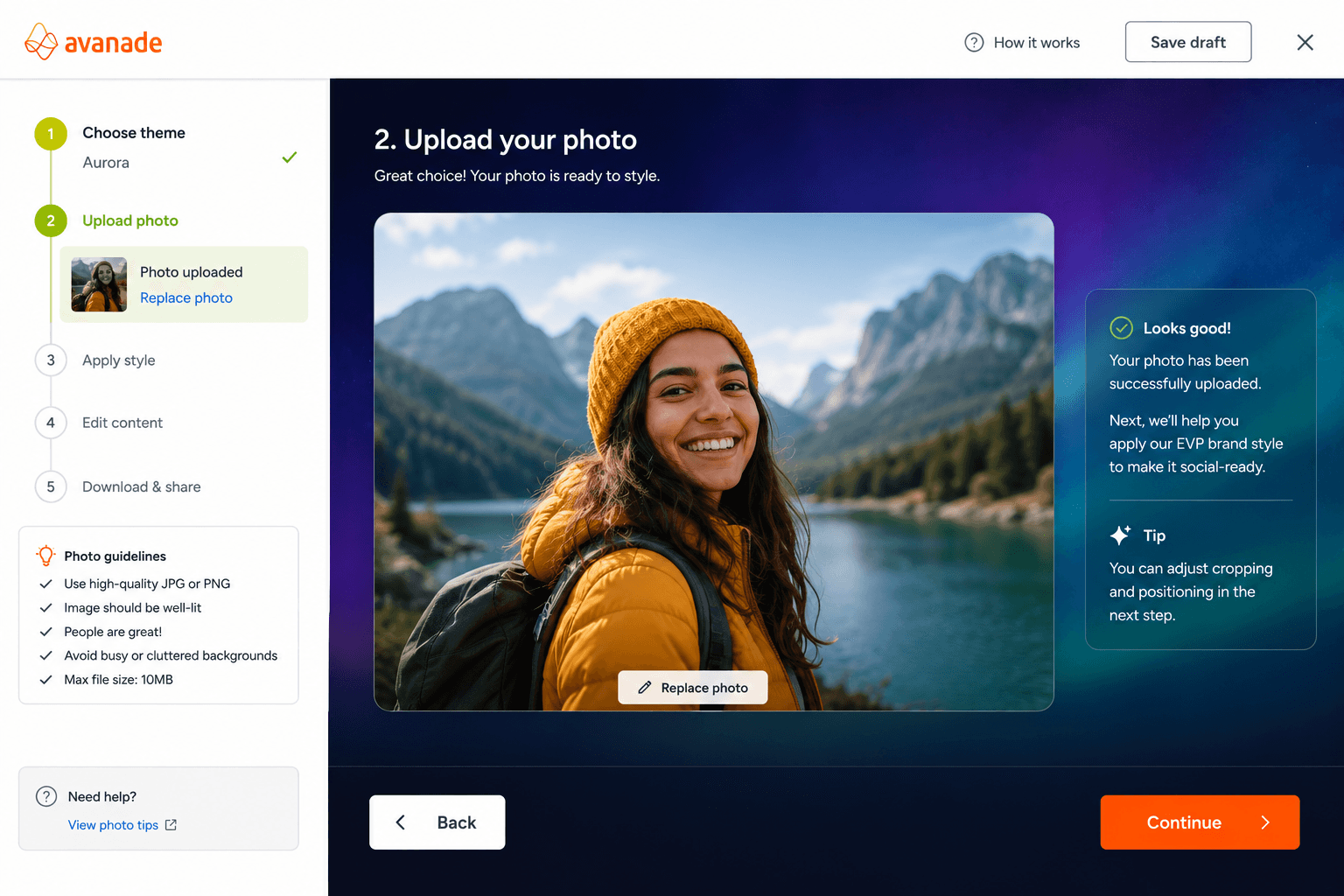
2. Upload a Photo
Users upload a personal image representing their work, team, or experience.
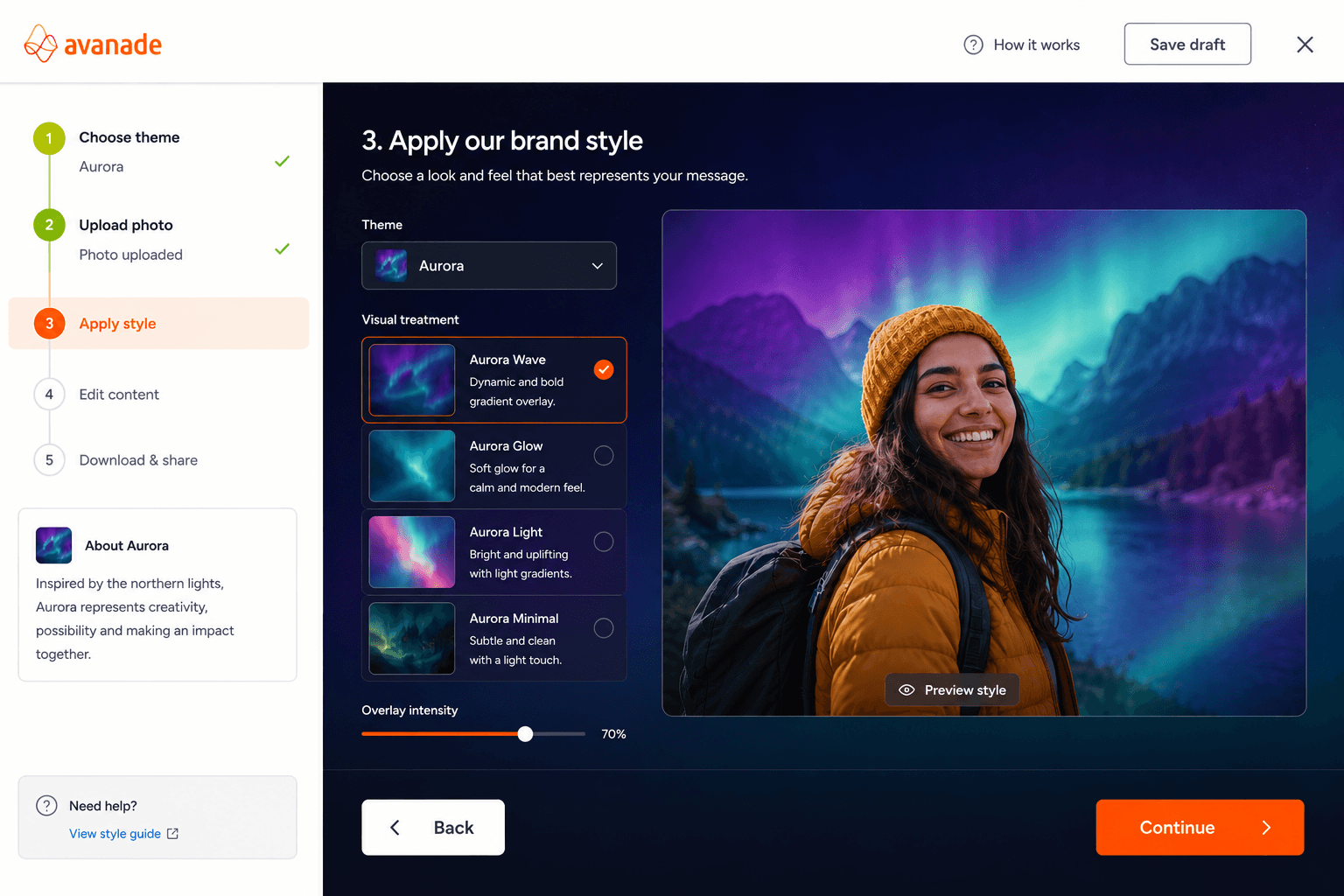
3. Apply Brand Styling
The system transforms the uploaded image using pre-approved visual treatments.
4. Customize Content
Employees personalize headlines, supporting copy, and calls-to-action.
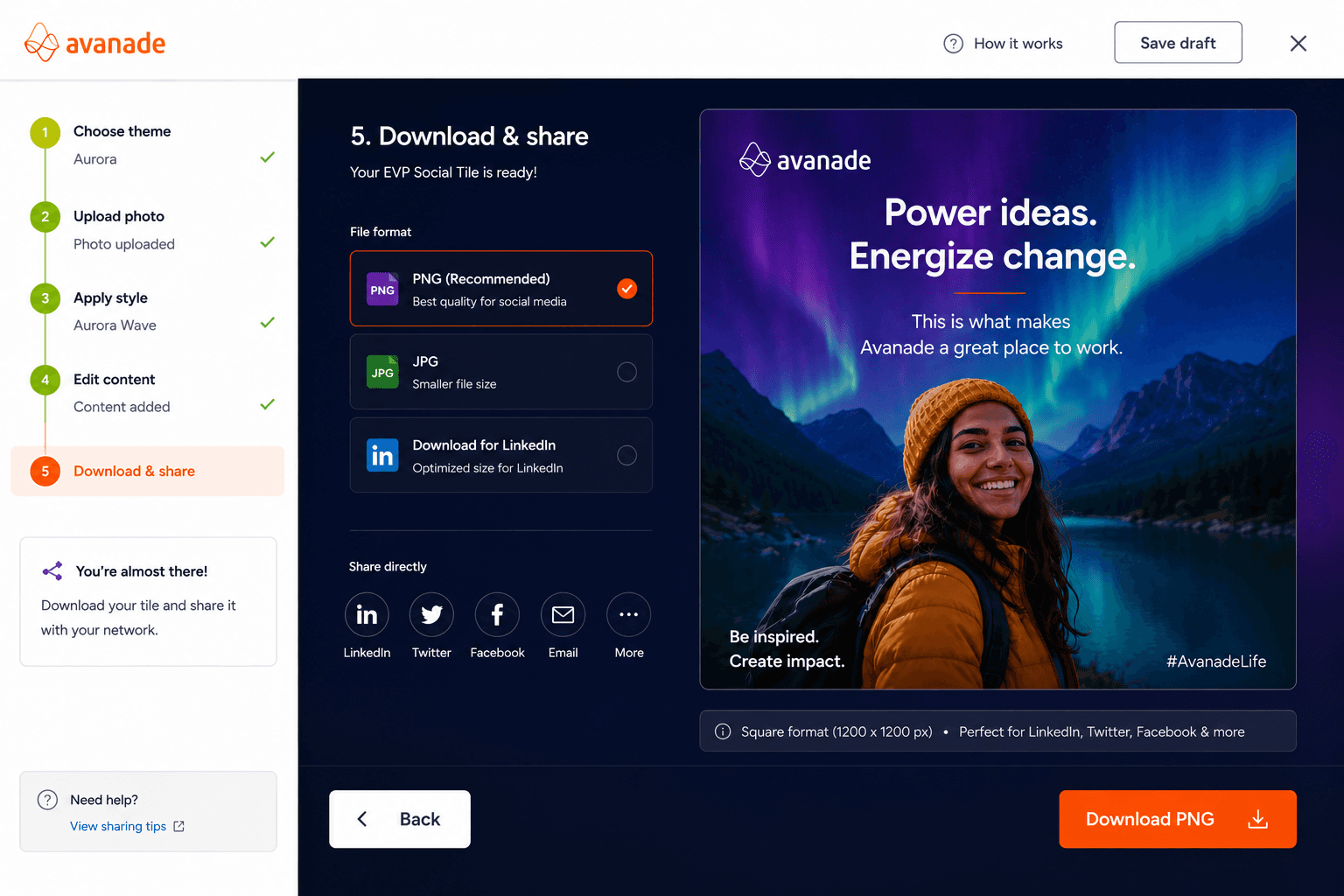
5. Preview and Download
Real-time previews allow users to validate content before export.
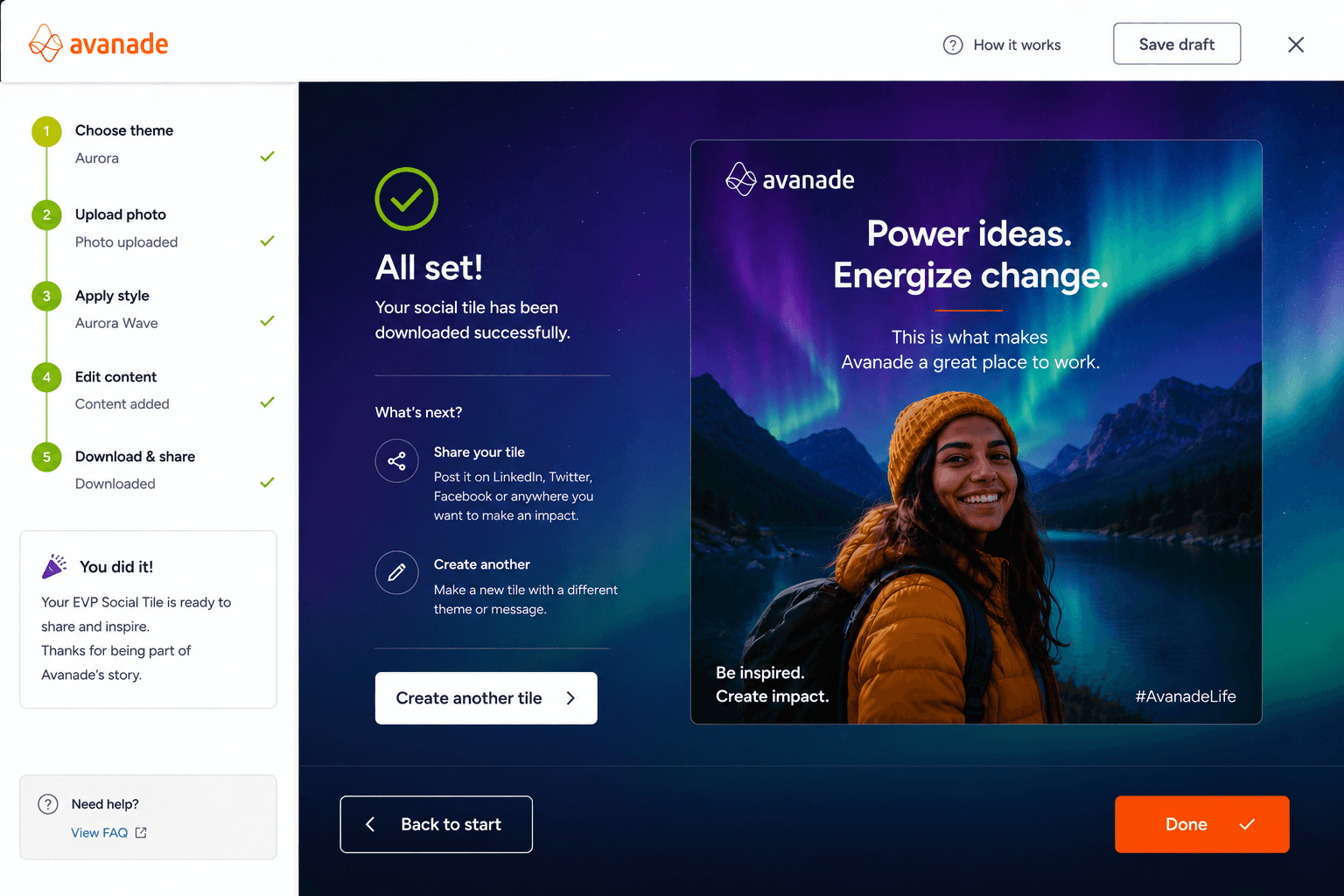
6. Share
The final asset is optimized for social media sharing.
Key Product Decisions
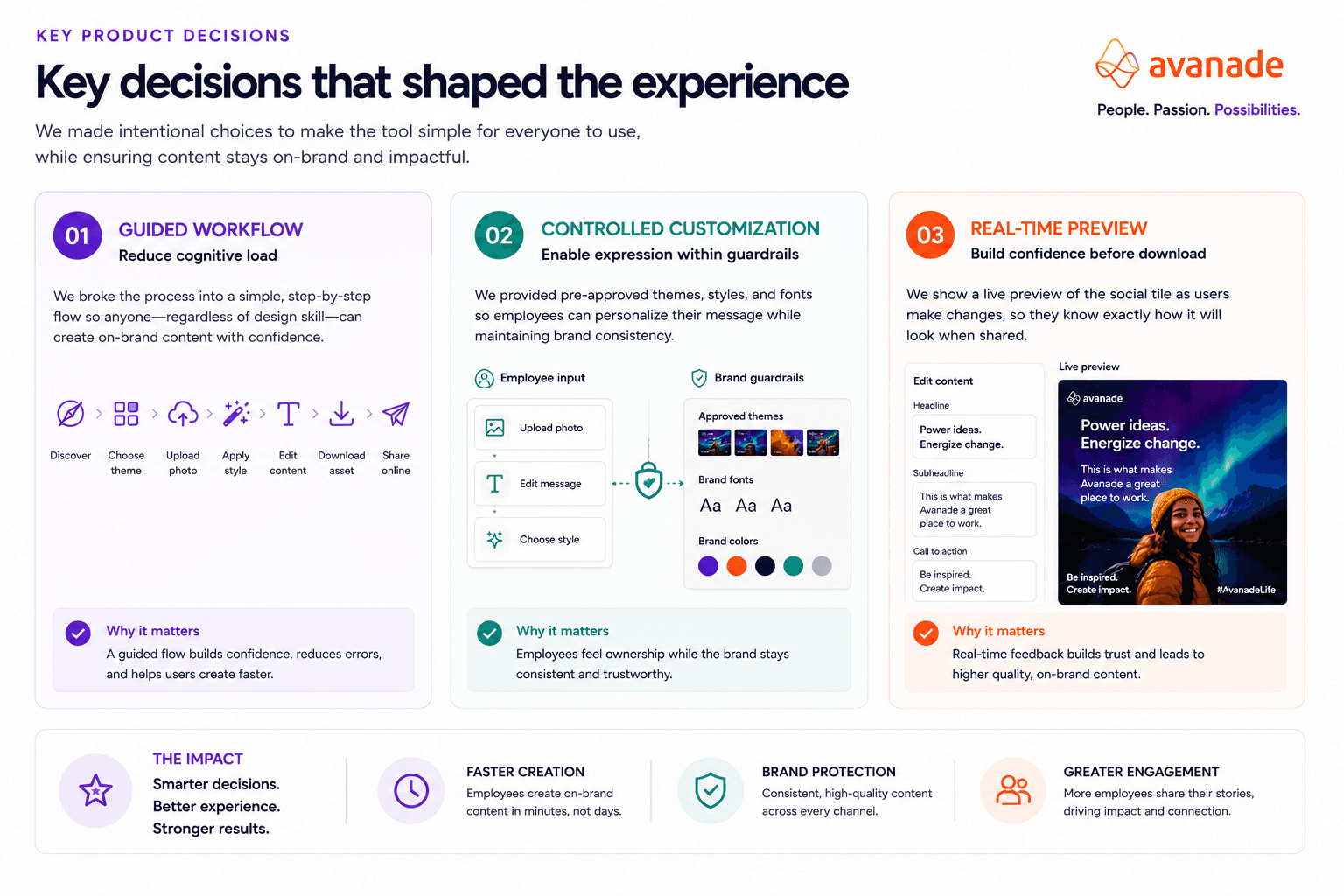
Guided Workflow
Rather than presenting a blank canvas, the experience guides users through a structured step-by-step process.
This reduces cognitive load and makes content creation approachable for non-designers.
Controlled Customization
Users can personalize content within predefined brand guardrails.
This ensures consistency while preserving individuality.
Real-Time Preview
Providing immediate feedback helps users understand the impact of their changes before exporting assets.
This builds confidence and reduces mistakes.
Reflection
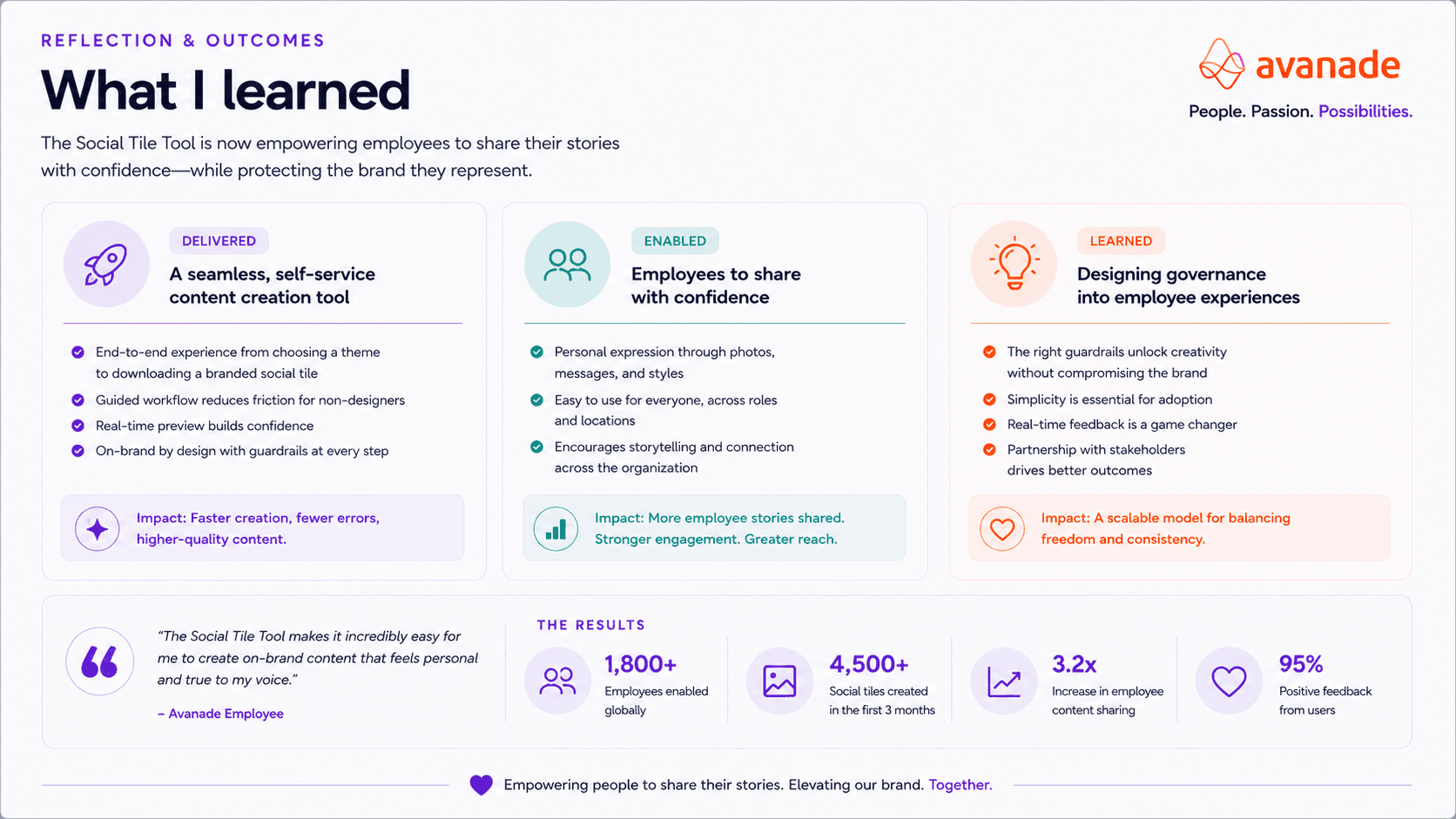
What initially appeared to be a visual design challenge was ultimately a product design problem centered around scalability, governance, and employee engagement.
The project reinforced the importance of designing systems that empower users while embedding the right constraints. The most effective experiences are often those that simplify complex organizational processes into intuitive, self-service journeys.
View detailed UX case study here